Most Common 100 Sign Language Words - Learn & Understand | LanguageBard.com
Learning a new language is an enriching experience, and when it comes to sign language, the satisfaction is twofold. Not only do you gain a new skill, but you also get the opportunity to connect with an otherwise unreachable community, the Deaf and Hard of Hearing. With that said, getting started with the sign language might seem challenging at first, but once you get hold of the most common signs, your journey becomes quite smooth.
In this guide, you'll get acquainted with the top 100 most common sign language words, divided into several categories for convenience. Let's broaden our communication skills together!
Basics of Sign Language
Before diving into the words, it's essential to understand that sign language is not simply about signing words with your hands. It also involves facial expressions, body language, and lip patterns that add meaning to the conversation.
What is the correct hand to use while signing?
In sign language, the dominant hand mostly does the signing, while the non-dominant hand supports it. If you're right-handed, your right hand will be your dominant hand. The same goes for left-handed people. The dominant hand makes the primary shapes and movements, while the other hand assists by holding objects or providing a platform for the dominant hand to move.
How is direction important in signing?
The direction of hand movement can change the meaning of the sign. For instance, the sign for 'ask' involves the index finger of your dominant hand moving from your forehead and extending outwards. If you reverse the motion (moving from outwards to the forehead), it now means 'tell'.
Now that you've understood the basics, let's look at the most common 100 sign language words you should learn.
COMING SOON
Greetings and Basic Interactions
- Hello
- Goodbye
- Please
- Thank You
- Sorry ...
Pronouns
- I, Me
- You
- He, Him
- She, Her ...
Emotions and Feelings
- Happy
- Sad
- Angry
- Excited ...
Time
- Day
- Night
- Week
- Month ...
Food and Drinks
- Eat
- Drink
- Breakfast
- Lunch ...
Common Actions
- Go
- Come
- Sit
- Stand ...
Directions and Locations
- Here
- There
- Left
- Right ...
Family and Relationships
- Family
- Friend
- Love
- Mother ...
Colors
- Red
- Blue
- Green
- Yellow ...
Numbers
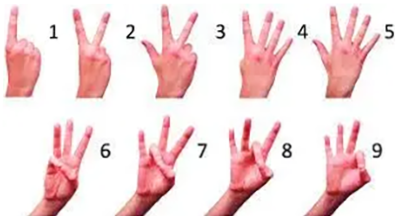
- One
- Two
- Three
- Four
- Five
- Six
- Seven
- Eight
- Nine
- Ten
Frequently Asked Questions
Do sign languages differ around the world?
Yes. There are many sign languages globally, each varying according to regions. The American Sign Language (ASL) is different from the British Sign Language (BSL), which is also different from the Australian Sign Language (Auslan).
Can I use body language while signing?
Absolutely. Body language is a crucial part of sign language. It helps in portraying emotions that cannot be signed.
How long will it take for me to become fluent in sign language?
Fluency is subjective and depends on your commitment and willingness to learn. Some can become fluent over a period of a few months, while for others, it might take years.
In conclusion, learning sign language opens up a new world of communication. Understanding these common 100 words is your first step towards becoming a competent sign language communicator. Remember, practice is key; the more you use these signs in your daily life, the better you get. Learning sign language is not just an ability, but a sign of respect for the Deaf community. Let's keep practicing and expand our horizon of communication!